Foldable Sanitation Solutions for Emergencies and Humanitarian Projects
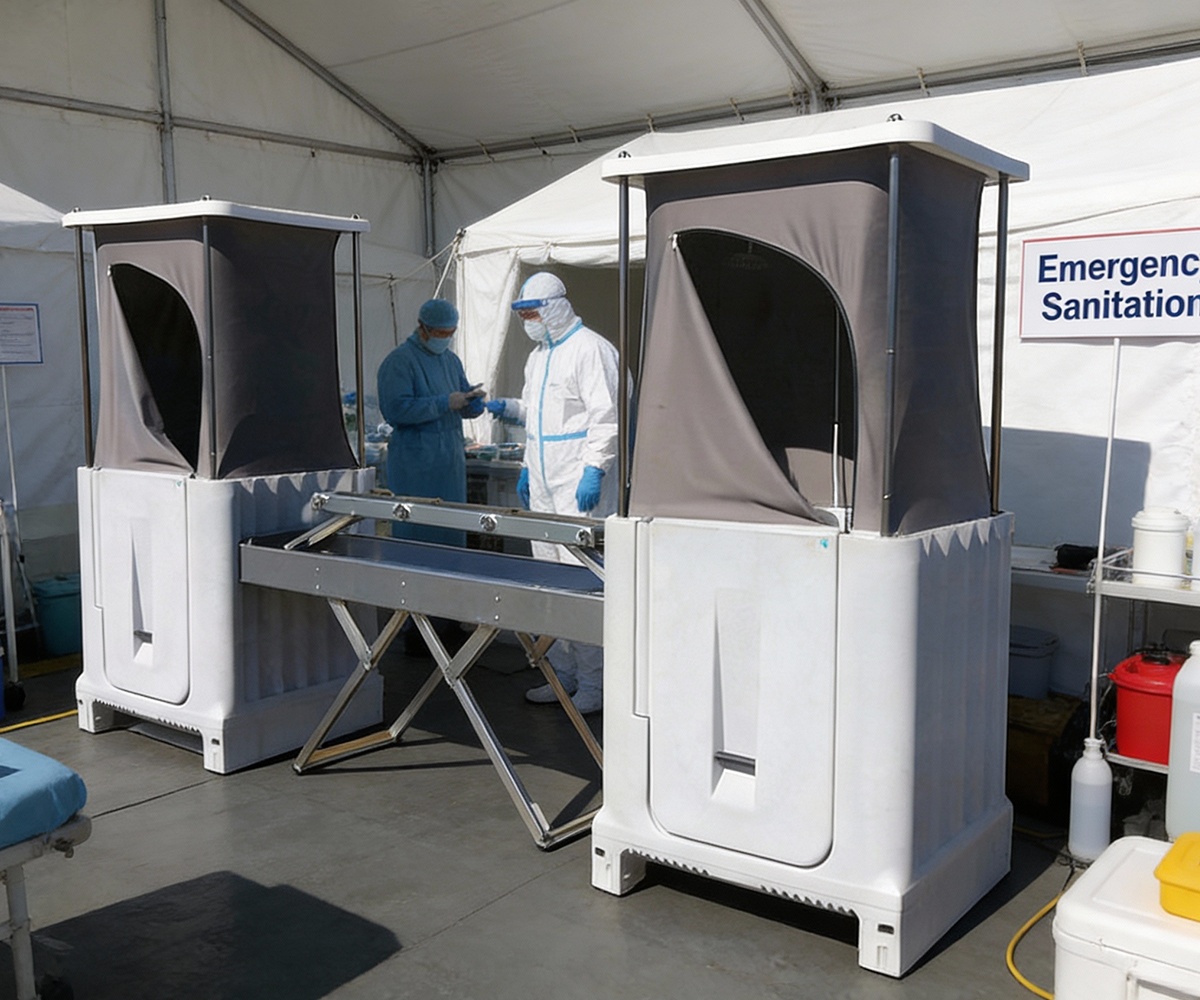
In emergencies and humanitarian missions, the challenge is not just to “have sanitation equipment”: it is to get it operational quickly, in environments where logistics are costly, infrastructure may be limited, and every hour counts. That is why foldable and stackable sanitation solutions exist: equipment designed to minimize shipping costs and accelerate deployment, with immediate usability from minute zero.
At Avanza Matrix, this range is designed with one priority in mind: immediate usability and easy assembly, ensuring that units arrive where needed and can be deployed without friction.
1) Why “foldable and stackable” is a strategic decision
In emergency deployment, the real cost of equipment is not just the product itself: it is the combination of volume, handling, transport, and commissioning time. Foldable and stackable units directly address these variables.
- Reduced volume per unit: transport more units per shipment and optimize available space.
- Improved loading efficiency: stackability simplifies logistics and warehouse operations.
- Greater field agility: fewer movements, less idle time, and reduced reliance on machinery.
- Fast deployment: units are designed to be operational immediately upon arrival.
In short: foldable and stackable means lower logistics costs and higher operational speed. In emergency contexts, that makes all the difference.
2) Designed for transport by virtually any means
When destinations are uncertain or changing, solutions cannot be designed for a single transport scenario. These units are therefore compatible with multiple transport methods and optimized for handling throughout the logistics chain.
This means equipment must not be logistically “fragile.” It must travel, be unloaded, and repositioned without turning commissioning into a separate project.
3) “Ready to use from minute zero”: what this means in deployment
In humanitarian or military contexts, speed is not an advantage — it is a requirement. Being “ready to use” upon delivery means:
- Fewer intermediate steps before becoming operational.
- Less dependence on tools, specialized staff, or lengthy assembly processes.
- Fewer failure points before service begins.
- Greater predictability when planning phased deployment.
The result is simple: logistics become a competitive advantage rather than a bottleneck.
4) Who typically uses these solutions
By nature, these solutions are designed for organizations requiring rapid response and frictionless operations. Main users include:
- Military institutions, due to the need for immediate deployment and mobility.
- Humanitarian aid organizations, due to urgency and unpredictable terrain conditions.
In both cases, the key criterion is the same: arrive sooner, install sooner, operate sooner.
5) What information is needed to size a deployment
Even when products are designed for simplicity, successful deployment requires defining key parameters:
- Number of users and operational timeframe (days/weeks).
- Environmental conditions (access, climate, terrain, logistics distance).
- Available infrastructure (water, drainage, electricity or autonomous setup).
- Operational model: servicing, cleaning, maintenance, rotation.
- Deployment priority: maximum speed, self-sufficiency, or cost/service balance.
The clearer these factors are defined, the easier it becomes to turn urgency into a sustainable operational system.
6) Where to explore this range
To explore the specific foldable and stackable range, start here: E-MERGE (foldable range).
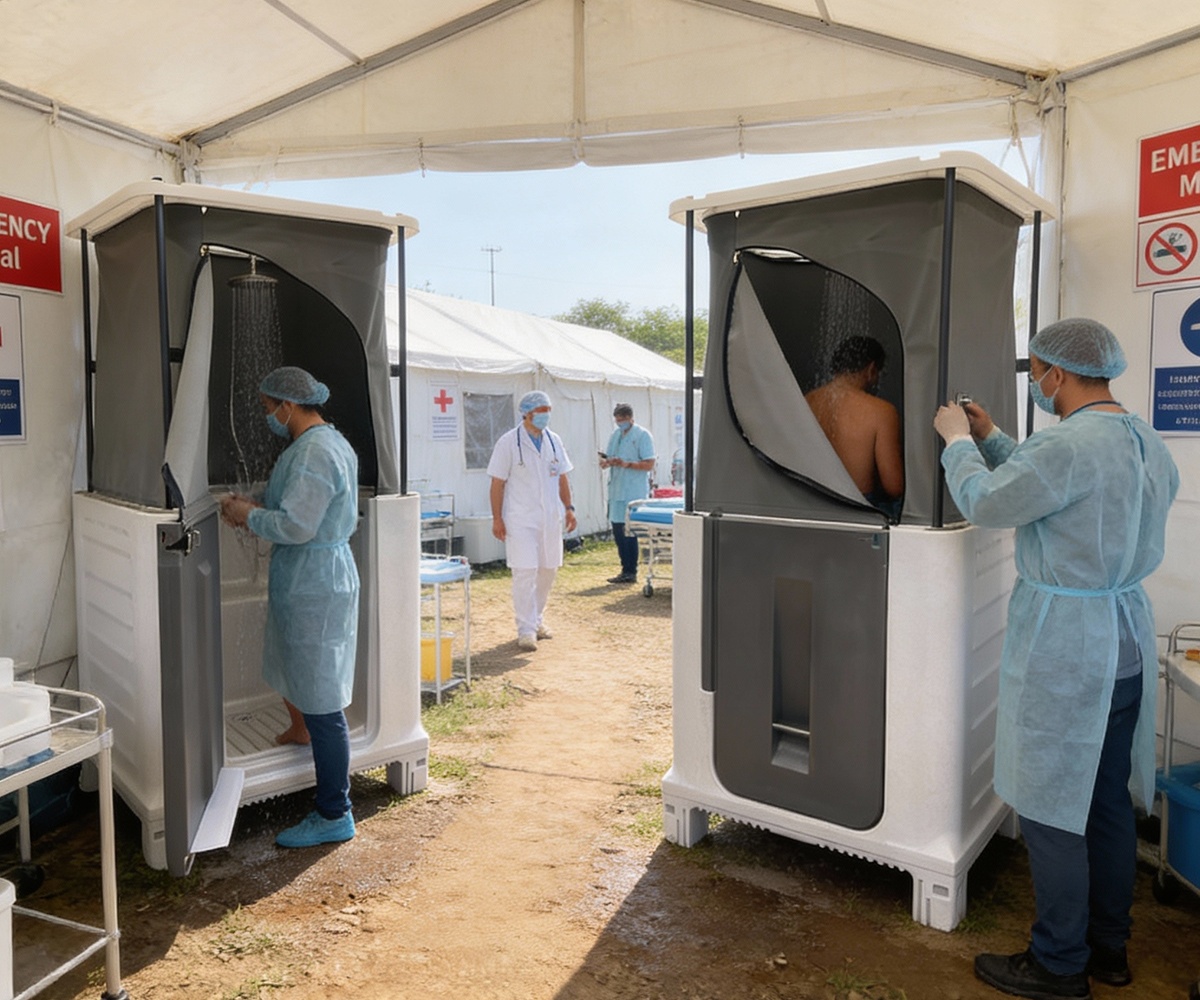
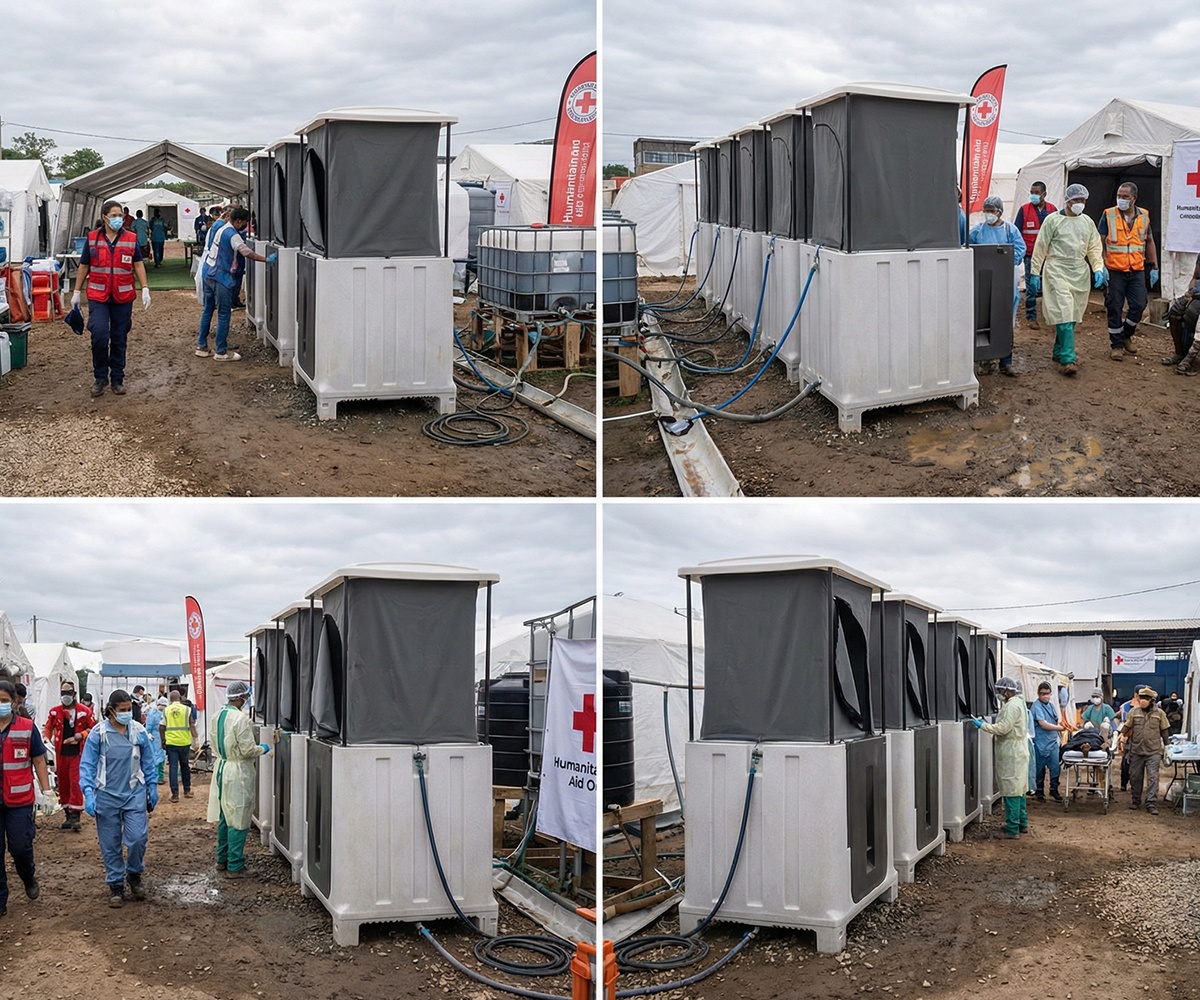
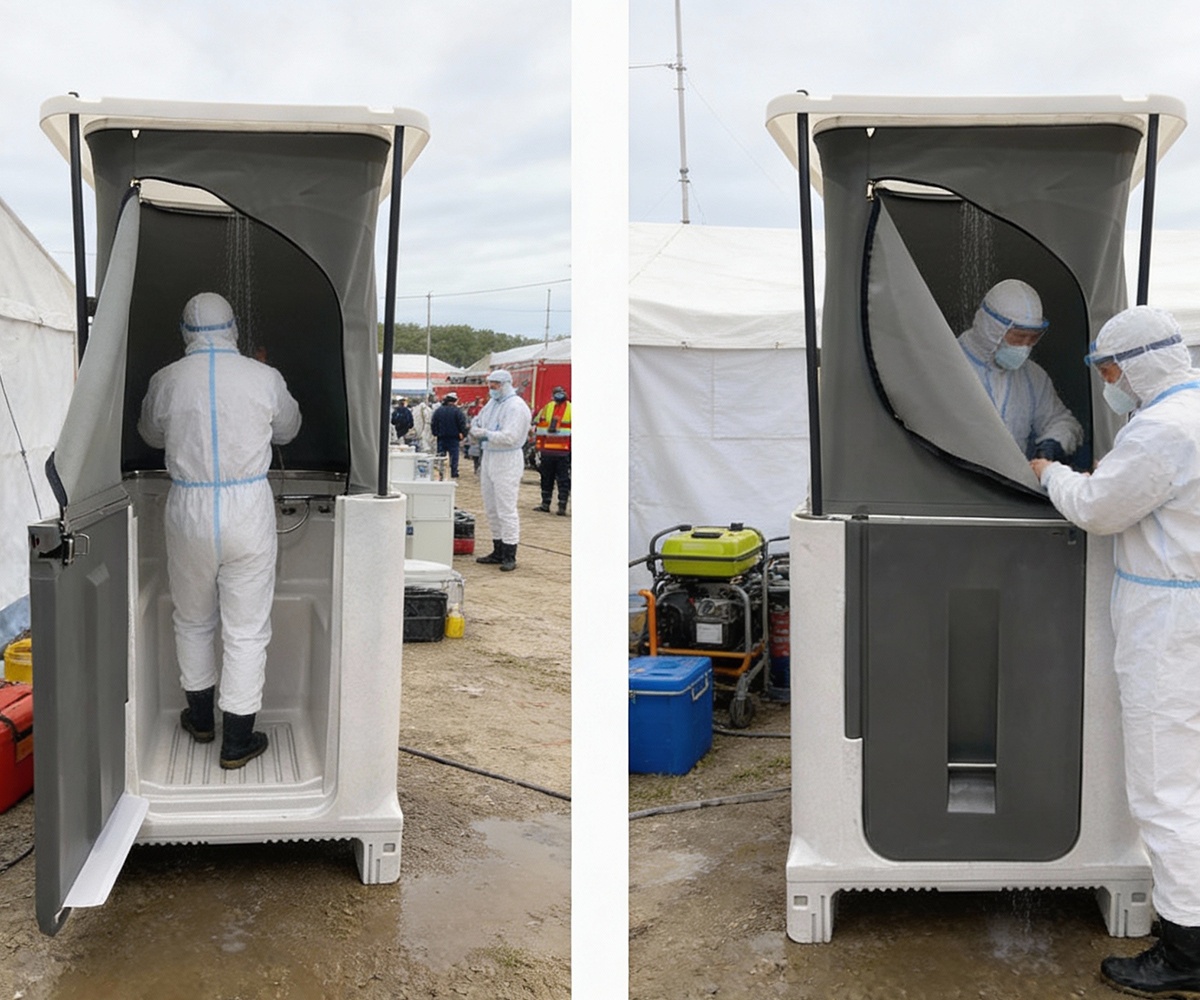
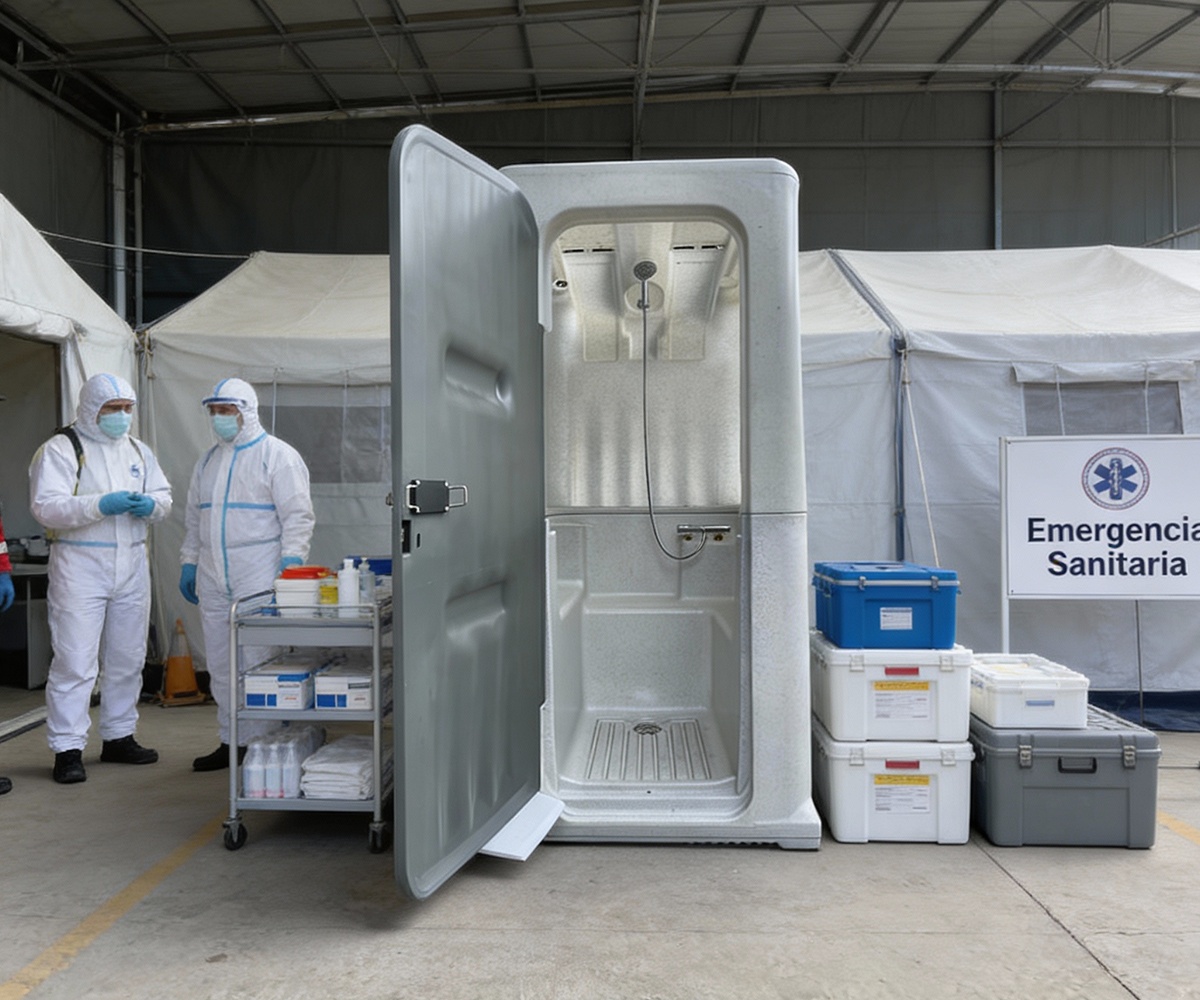
If full hygiene integration is required (for example, showers in camps or temporary bases), you can complement with: Portable showers.
Conclusion
In emergencies and humanitarian projects, the ideal sanitation solution is one that reduces friction: lower logistics costs, easier transport, and immediate usability. Foldable and stackable units exist precisely for this purpose — delivering hygiene where it is needed, when it is needed, with fast and reliable deployment.